Christmas Health & Safety Tips

Christmas Health & Safety Tips

The festive season is a time for celebration, family, and fun—but it’s also a time when accidents and health issues can happen if we’re not careful. Follow our checklist below to ensure you have a fun filled and safe lead up to Christmas:

  • Check your Christmas lights, inspect for frayed wires or broken bulbs before decorating. Are all lights PAT tested?
  • Ensure real Christmas trees are regularly watered so they don’t dry out or become a fire hazard.
  • Ensure the safe location of decorations, they must not be near light fittings or heaters. 
  • Check your absestos risk register before fixing any decorations into walls.
  • Do not overload electrical sockets or be tempted to daisy chain extension leads.
  • Are your working at height risk assessments up to date?
  • Are you using industrial approved ladders only, to EN131 professional standard?
  • Have you risk assessed all Christmas events to ensure sufficient controls are in place e.g. christmas performances, christmas markets
  • Are Christmas related risk assessments communicated to all relevent staff? Don’t forget to communicate to any volunteers too.
  • Ensure your sites are sufficiently secured including external areas when locking up for the holiday period.

Don’t forget to enjoy your well earned rest and have fun over the festive period!

Contact Us

Should you require any support with effectively managing your risks, then please contact us.

Martyn’s Law – How to Prepare to Ensure Public Safety

Martyn’s Law – How to Prepare to Ensure Public Safety

Who is the law likely to affect?

Martyn’s Law is likely to impact a wide range of venues, including large-scale concert arenas, theatres, sporting stadiums, shopping centres, hospitality venues, museums, galleries, cinemas, and smaller public spaces such as community centres or local pubs with live events.

What is required?

It’s important to recognise that the measures implemented are proportionate to the risk. Therefore, Martyn’s Law introduces a tiered approach to compliance based on venue size, capacity, and risk profile. Smaller venues, such as boutique cinemas or community theatres, will need to implement straightforward measures: staff training, clear evacuation procedures, and basic incident response planning. For these venues, the focus is on awareness and preparedness, ensuring that employees know how to act in a crisis and to ensure they have a thorough risk assessment.

The legislation establishes two tiers of assessment – standard and enhanced – depending on venue size and capacity. These assessments determine the scale of protective measures required.

Larger venues, such as stadiums, concert arenas, and major shopping centres, will be required to carry out more detailed risk assessments and implement comprehensive protective measures. These may include controlled access points, hostile vehicle mitigation, enhanced surveillance, and coordination with local emergency services.

Who will be regulating and enforcing Martyn’s Law?

The Security Industry Authority (SIA) will be the primary regulator and enforcer of Martyn’s Law (the Terrorism (Protection of Premises) Act 2025), with a new regulatory function established within the SIA to oversee compliance. 

Aiming for a higher standard than legislative compliance

It is important to recognise that meeting the legal minimum is only the starting point. Organisations should aim to go above and beyond the legal requirements.

For example, a medium-sized theatre may comply by training staff on evacuation procedures, but a proactive approach might involve conducting regular scenario-based drills, engaging with local police on emergency planning, and implementing visitor communication strategies during incidents. Similarly, a shopping centre could go beyond compliance by reviewing parking layouts to minimise vehicle-based threats or by providing staff with situational awareness and de-escalation training.

Management need to be committed in ensuring sufficient resources are available and prioritise security.  Employees need training in recognising suspicious activity, understanding evacuation routes, and reacting calmly and decisively under pressure.  Regular drills and exercises are essential to test employees’ responses and identify improvements.

Current Threat Level

MI5, The Security Service, identifies current UK threat levels as significant. And while there is a 24-month implementation period extending to April 2027, an attack could occur at any time.  Therefore, it is essential that all organisations ensure they have sufficient protective measures in place.

Protective Measures

The goal is to implement reasonable measures that protect visitors and staff.  These may include:

  • controlled access points: ticketed entry, ID verification, and bag checks to manage who enters the venue;
  • surveillance and monitoring: CCTV systems that cover entrances, exits, and key public areas, supported by trained operators;
  • hostile vehicle mitigation: barriers, bollards, or landscaping to prevent unauthorised vehicle access at large-scale events;
  • emergency communication systems: clear signage, panic buttons, PA systems, and digital notifications to inform visitors in real-time; and
  • staff positioning and patrolling: visible security presence to deter potential attackers and reassure the public.

Venue Examples

  • Concert arenas require robust crowd control, clear evacuation procedures, hostile vehicle mitigation, and coordination with law enforcement.
  • Stadiums and sporting venues need risk assessments for crowd density, emergency medical services, and access control for players and staff.
  • Shopping centres and retail parks should consider vehicle access points, CCTV coverage, and staff training for incident reporting.
  • Museums, galleries, and cultural venues benefit from discreet protective measures that safeguard visitors while maintaining accessibility and openness.
  • Community centres and smaller venues should focus on training, awareness, and simple, clear emergency procedures suitable for their scale.

The principles remain the same throughout all venues: assess risk, train staff, implement practical measures, and embed preparedness into organisational culture.

Contact Us

Should you require any support with reviewing your protective measures, then please contact us.

HSE inspection of schools to manage asbestos

HSE inspection of schools to manage asbestos

The HSE is continuing to inspect schools across Great Britain to assess how well they are managing the risks from asbestos.  


The findings of the HSE’s 2023-2024 inspections show that the majority of schools are complying with their legal duties and have effective systems in place to manage asbestos containing materials.

The HSE have identified that there are some common areas which employers need to improve, mainly in regards to their management systems.

Key findings

Schools should:

  • ensure staff and organisations have clear roles and responsibilities for managing asbestos and have deputies or contingency plans in place to cover for absences.
  • check when contractors tender for work, that there is a permit to work or similar safe system of work in place.
  • have clear asbestos management plans including how information is provided to emergency services who attend site.
  • include photographs of asbestos containing materials in their registers to assist with identifying their locations and condition.
  • check that in house staff carrying out maintenance work on or near asbestos have a method statement, also known as a plan of work.
  • provide appropriate asbestos training for in house staff and ensure that external contractors are appropriately trained.

Resources and support

HSE’s ‘Asbestos – Your Duty campaign’ provides free resources to support dutyholders with the legal duty to manage asbestos in buildings.    

Should you like any assistance with fulfilling your legal obligations to effectively manage your asbestos, or have any questions, just get in touch.  

Contact Us

Feel free to contact us if you need any advice regarding what these legislative changes mean to you.

Intruders – lockdowns

Intruders – lockdowns

Due to the recent horrific events in Southport, never has the safeguarding of children been closer to our minds.  Particularly with summer holiday club activities being well underway.  

The current national threat level of terrorism is ‘substantial – an attack is likely’.


Employees should always remain alert to the danger of terrorism and report any suspicious activity to the police on 999 or to the anti-terrorist hotline: 0800 789 321


Lockdown of a building or buildings is an emergency procedure to secure and protect occupants near an immediate threat. By controlling movement in an area, emergency services can contain and handle the situation more effectively.

Most workplaces have existing procedures for handling an emergency which involves evacuation of the premises and will be focused on an event happening in the building.  However, in some situations, it is likely persons will be advised to stay put (lockdown) rather than evacuate the premises.  Therefore, it is imperative that you review your emergency plans and plan for invacuations (lockdowns) rather than evacuations.   

Risk Assessment

If is foreseeable that there could be an immediate threat to any person within your control, you should undertake a risk assessment to assess the likelihood of an incident happening in the vicinity and ensure suitable controls are implemented.  Controls which may be suitable dependent on the site and/or location are:


  • Regularly reviewing and practicing emergency procedures.
  • Checking the police website for advice about managing a range of issues that may be prevalent in the local area.
  • Ensuring local police contact numbers are clearly displayed for staff to refer to.
  • Following any advice for managing emergency situations issued by the local authority.
  • Sharing information with building users to advise them of the actions to be taken in the event of a ‘lockdown’ and what they should do.
  • Ensuring all staff are aware of their role during a  ‘lockdown’.

Lockdown Procedures

If an emergency happens the responsible person (Incident Control Officer) must act quickly to assess the likelihood of immediate danger.  In most cases the assumption should be that it is safer to stay put and place the setting into ‘lockdown’ until the emergency services arrive.  

It is important to remember that it is very much the exception to evacuate a building in the event of a hostile intruder.  Unless the location of the intruder(s) is known, a “blind” evacuation may be putting people in more danger (e.g. from an intruder or device at one of the entrances/exits) than if they had remained within the building.

As soon as the emergency services arrive it is essential staff comply with instructions given.

It is therefore vital that you have specific procedures detailed for your setting, communicated to key persons and the lockdown procedures are regularly practiced.

Should you like any assistance with developing your risk assessments and procedures, please don’t hesitate to get in touch.  Useful information including FREE training can also be found at the Protect government website, by clicking below or simply contact us.

Contact Us

Feel free to contact us if you need any advice regarding what these legislative changes mean to you.

The Importance of a Health & Safety Audit
The Importance of a Health & Safety Audit

Do you worry that:

  • an employee could be injured or suffer ill health?
  • you may be exposed should an employee submit a claim?
  • you may have a sudden visit by the enforcing authority?
  • costs may spiral out of control?

Where do you start?

A good starting place is to have a visit by one of our qualified consultants. They will undertake an audit to identify the risks to your employees, contractors and visitors along with reviewing what you already have in place.

You may already have systems in place which merely need reviewing and bringing up to date. You may have no documented health and safety management system in place but want practical and realistic advice on what you need to implement, to sufficiently manage your risks. We can offer clear advice which is in proportion to your risks.

So, what is an audit?

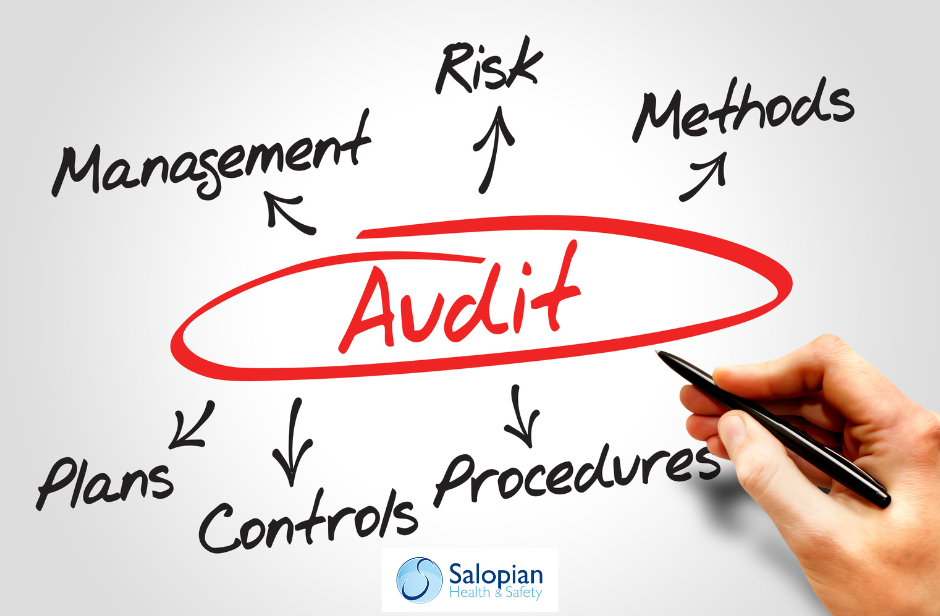
An audit is a systematic, independent and documented process. This allows you to measure your safety management systems consistently, with the aim of achieving continuous improvement.

Why have an audit?

The main reasons orgnisations should regularly audit their health and safety management system are, to ensure all risks are adequately managed and to ensure compliance with health and safety legislation, such as the Health and Safety at Work Act etc 1974 and the Regulations made under this Act.

It is notable that when the Health and Safety Executive undertake their investigations into major accidents, they usually highlight health and safety management failures as being the root of the cause.

How is an audit undertaken?

Initially, one of our consultants will visit your premises and complete an initial evaluation of the systems and procedures already in place, checking compliance with current health and safety law. This will involve reviewing your current documentation such as policies, risk assessments, training records, work instructions, inspection records etc. A physical inspection of your site will then be undertaken. This will identify any hazards which require improved management and discussions will be held with your employees.

If a weakness is identified, it will be detailed within an Audit Report which includes an evaluation of what is required and an action plan to make the necessary improvements.

So, what are the benefits of an audit?

  • Reduce risks.
  • Improve your compliance with the law.
  • Benchmark your organisation against other organisations outside or within your sector.
  • Having an independent auditor of your policies and procedures means that you get a reliable, unbiased report of findings and an objective action plan for improvement.
  • Control systems weaken over time and need to be constantly reviewed.
  • It helps demonstrate management commitment to employees and third parties.

What next?

Once your audit has been undertaken, you’re now in a better position that you know what needs to be implemented to better protect your employees, visitors, contractors and your business.

You may have the resource internally to complete the actions, or you may choose for one our consultants to visit and support you with this process.

We offer various consultancy packages. These are specifically designed to suit individual business needs following audits.  We pride ourselves in getting to know and understand specific business requirements and developing consultancy packages that are right for businesses, in terms of supporting their needs and budget.

If you’d like a chat to discuss any assistance that you may require in getting focused and drawing up an action plan, then please get in touch.


Violence at Work

Violence at Work

The Health and Safety Executive’s definition of work-related violence is: ‘Any incident in which a person is abused, threatened or assaulted in circumstances relating to their work’. 


HSE figures for 2019/20 reveal that there were 688,00 incidents of violence at work. These comprised 299,000 assaults (of which 37% resulted in physical injury) and 389,000 threats.

Risk factors for violence

According to the HSE the following issues represent key risk factors:
• Drink, drugs or inherent aggression/mental instability.
• Resentment (having no right to appeal decisions).
• Impatience.
• Frustration (due to lack of information or boredom).
• Anxiety (lack of choice, lack of space).
• Target for robbery (eg. money handling or retail premises).
• Poor design of premises.

Violence at work tends to be perpetrated by:
• disgruntled colleagues
• clients/customers
• patients
• residents
• pupils
• members of the public

Anyone who experiences violence at work should be encouranged to contact agencies outside the workplace to help them recover from the incident, in additon to receiving support from their employer.  Vicitim Support offers a support line. Tel: 0808 1689 111 https://www.victimsupport.org.
uk

Lone workers are at greater risk of violence at work. 

Ensure your risk assessment reflects this.


Jobs that expose workers to the risk of violence

Based on the experience of its members, the Trade Union UNISON has highlighted certain work activities that predispose workers to a risk of violence. Such work activities include:
• Handling money.
• Handling drugs, or having access to them.
• Carrying expensive equipment such as laptops, mobile phones, expensive tools for professional trades.
• Giving care to people who are ill, distressed, afraid, in a panic or on medication.
• Associating with people who have a great deal of anger, resentment or feelings of failure.
• Dealing with people who have unrealistically high expectations of what an organisation can offer and who are seeking quick easy solutions to long term and complex problems.
• Dealing with the friends and families of clients who may be concerned or feel inadequate in relation to the large organisation from which they are seeking help.
• Working with people who have previously used violence to express themselves or achieve their needs.
• Exercising power to restrict the freedom of individuals, eg in the case of an arrest.
• Enforcing legislation – eg EHOs, bailiffs, social workers.
• Working alone, in clients’ homes, in physically isolated units, or at hours when few other employees are around – eg care workers.
• Following procedures which do not provide much information to clients about what is happening.
• Working in units which do not have a human image – often crowded, busy, uncomfortable and lacking in essentials for the public such as refreshments, telephones and children’s toys.
• Working under pressure created by increased workloads, staff shortages, and the absence of alternative support for the client.

Recommendations for employers:

• Assess the risks to workers (including the risk of foreseeable violence), decide how significant these risks are, prevent or control the risks, and develop a clear management plan.
• Consult with the workforce and their representatives about risk assessments and actions.
• Develop and implement a violence prevention policy and ensure everyone is aware of their responsibilities.
• Establish clear grievance and disciplinary procedures.
• Establish debriefing and support mechanisms for those who are subject to a violent attack and potentially, for those who witness an incident.

Case law

A council was fined £100k following a lone worker policy failure. The prosecution came after two social workers were assaulted on a home visit by the mother of a vulnerable child they were visiting. Whilst note taking both
social workers were struck over the head with a metal object by the mother, resulting in one being knocked temporarily unconscious.
The HSE found that the local authority had failed to follow its corporate lone working policy or violence and aggression guidance. No risk assessment was completed and staff were not trained accordingly.
Employers must do all they can to provide their staff with a safe working environment.

Contact Us

Feel free to contact us if you need support with managing violence within your team.  We can offer risk assessments, toolbox talks and policy writing.